How to Playfully Promote Early Learning
Early childhood offers unique opportunities as young minds absorb knowledge and transform experiences into learning. Parents who earnestly seek to nurture and enhance their children's cognitive development often find themselves wondering how they might successfully balance ambitious educational goals with the spontaneous, natural joy of childhood play. The solution isn't found in strict academic frameworks, but rather in adopting play-centred learning methods that respect children's natural curiosity whilst establishing crucial foundations for their future educational achievement.
Contemporary research conducted by premier educational institutions across the United Kingdom demonstrates, through extensive longitudinal studies and rigorous empirical analysis, that children who regularly engage in carefully structured play-based activities consistently develop markedly stronger problem-solving abilities, significantly enhanced social skills, and demonstrably greater emotional resilience when compared to those experiencing traditional rote learning methods. This groundbreaking insight has revolutionised how teachers and parents approach early childhood development, moving from passive teaching to active discovery.
Discovering the Magic of Play-Based Learning for Young Minds
Play-based learning harnesses children's natural inclination to explore, experiment, and discover through hands-on experiences that feel like pure fun whilst secretly building crucial neural pathways. When children engage with educational toys, puzzles, or creative activities, their brains form connections that support mathematical thinking, language development, and spatial awareness without the pressure of formal instruction. Interactive learning platforms like edurino exemplify this approach by combining digital technology with tangible play elements, creating immersive educational experiences that captivate young learners. These innovative tools recognise that children learn best when multiple senses engage simultaneously, incorporating touch, sight, and sound into cohesive learning adventures. Research from Cambridge University highlights how guided play in education matches or exceeds outcomes from direct instruction, particularly for developing executive function skills essential for school readiness.
Interactive Educational Tools That Transform Screen Time into Learning Adventures
Digital learning resources have evolved beyond passive consumption, offering interactive experiences that adapt to individual learning styles and developmental stages. Smart educational apps use gamification to reward progress and motivate continued learning through virtual achievements. These platforms track learning patterns and adjust difficulty automatically. Parents worried about screen time can choose programmes that encourage active participation, problem-solving, and creative storytelling. Choose educational tools that demand active participation and critical thinking, not just entertainment. Quality educational technology, through its carefully designed interactive features and pedagogically sound principles, transforms tablets and smartphones, which might otherwise serve as mere distractions, into remarkably powerful learning companions that effectively complement, rather than replace, traditional play materials in children's developmental journeys.
Age-Appropriate Activities That Boost Cognitive Development Through Fun
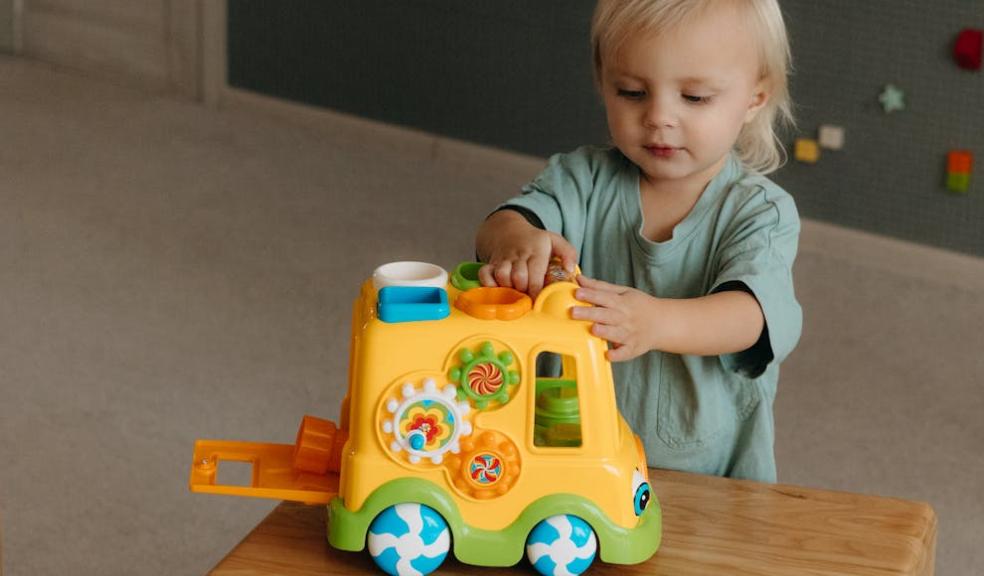
Tailoring activities to match developmental milestones ensures children experience success whilst gradually expanding their capabilities through carefully calibrated challenges. Toddlers benefit from sorting games using everyday objects, developing classification skills whilst learning colours, shapes, and sizes through tactile exploration. Preschoolers thrive with more complex activities like simple board games, construction sets, and role-playing scenarios that introduce basic mathematics, sequential thinking, and social negotiation skills.
Musical instruments and rhythm games enhance pattern recognition, temporal processing, and coordination whilst providing joyful sensory experiences that children naturally gravitate towards. Parents can discover additional ideas through resources like musical learning books that transform reading into interactive adventures, combining traditional storytelling with engaging sound elements. Art projects incorporating various materials teach fine motor control, colour theory, and creative expression whilst allowing children to communicate ideas before verbal skills fully develop.
Building Essential Pre-School Skills with Gamified Learning Approaches
Gamification transforms routine skill-building exercises into exciting quests where children become heroes of their own learning journeys, conquering challenges and earning rewards through persistence and problem-solving. Letter recognition becomes treasure hunting, counting transforms into rocket launching sequences, and shape identification turns into puzzle-solving adventures that maintain engagement whilst reinforcing fundamental concepts. These playful approaches build confidence alongside competence, teaching children that mistakes represent learning opportunities rather than failures.
Social skills develop naturally through cooperative games requiring turn-taking, sharing resources, and negotiating rules, preparing children for classroom dynamics they'll encounter in formal education settings. Parents exploring Montessori-inspired learning methods for daily routines discover how everyday activities become educational opportunities when approached with intentionality and creativity.
Measuring Your Child's Progress Through Playful Educational Milestones
Tracking developmental progress through play-based observations provides authentic insights into children's growing capabilities without introducing stress or performance anxiety. Parents can maintain comprehensive journals that carefully document new skills their children demonstrate during play sessions, whilst noting significant improvements in attention span, problem-solving strategies, and creative thinking approaches.
Photographing children's artwork and building projects creates visual timelines documenting their developmental progress over time. Through regular play sessions, parents can identify children's emerging interests and natural talents, particularly areas showing enthusiasm or aptitude.
Celebrating small victories through positive reinforcement not only encourages continued exploration and discovery but also systematically builds children's self-esteem whilst fostering their intrinsic motivation for learning throughout their developmental journey. Understanding that development occurs in waves rather than linear progression helps parents maintain realistic expectations whilst appreciating each child's unique learning journey.
Nurturing Lifelong Learning Through Joyful Discovery
Creating environments where learning becomes adventure instead of obligation builds positive associations lasting throughout academic careers. Children experiencing education as exploration cultivate growth mindsets, perceiving challenges as puzzles rather than obstacles. Parents act as learning companions instead of teachers, showing curiosity and proving that adults never stop learning.
Through simple yet thoughtful adjustments to daily routines that seamlessly incorporate educational elements in natural, unforced ways, cooking together introduces practical measurements and fascinating chemical reactions, whilst nature walks transform into impromptu science expeditions, and traditional bedtime stories evolve into collaborative, interactive narratives where children enthusiastically contribute their own imaginative plot developments. This comprehensive approach acknowledges that genuine learning occurs everywhere, fostering curious minds whilst building academic foundations.
More from: Education

Buster Honey Bee
Image