
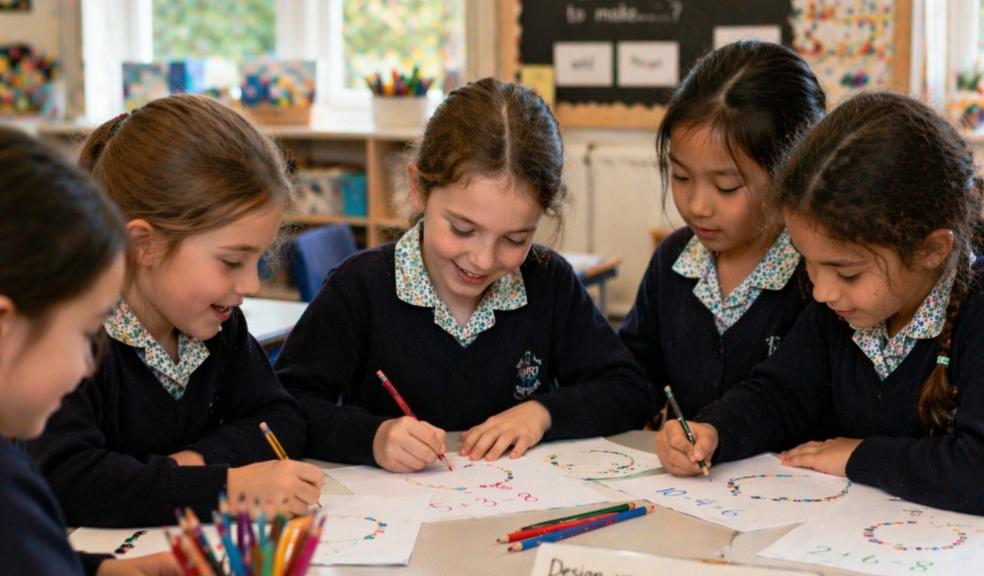
Why Early Interests Matter in Education
Consider for a moment what your daughter was interested in at the age of seven.
A child’s early interests are not just passing phases — they are often the first signs of how they think, learn, and engage with the world.
Perhaps it was horses, or coding, or drawing maps of imaginary countries. Perhaps it was reading, chemistry kits, or cataloguing every bird she spotted in the garden. Whatever it was, it almost certainly felt, at the time, like a phase.
But research in developmental education and cognitive science increasingly points to something important: the early interests of children are not random. They are often the first expressions of underlying strengths, ways of thinking, and modes of engagement with the world that persist, in some form, throughout a person's life.
This does not mean that the girl who was obsessed with horses at seven will necessarily become an equine vet. But it does mean that the curiosity, commitment, and depth of engagement she brought to that interest are qualities worth nurturing. Interests are not just hobbies. They are practice grounds for the skills that matter most in adult life.
Interests as Incubators
When a child becomes absorbed in something she genuinely cares about, she is developing more than knowledge of that subject. She is developing the ability to focus, to research, to tolerate frustration, to seek out challenge, and to pursue mastery. These are precisely the qualities that universities, employers, and indeed life itself will reward.
The danger is in dismissing early interests as trivial, or in steering children too quickly towards what we believe will be useful. A child who loves writing stories at eight may not become a novelist. But the ability to construct a compelling narrative, to think about an audience, to revise and refine: these skills will serve her in almost any field she chooses.
The Role of Education
Girls' education that values the whole person tends to produce young women who know themselves well: their strengths, their passions, and their direction. Schools that take early interests seriously, and create space for them to flourish alongside academic rigour, are investing not just in attainment but in identity.
RMS for Girls in Rickmansworth, Hertfordshire, is a leading independent school for girls aged two to eighteen, known for its strong pastoral culture and its commitment to helping each pupil discover who she is and what she is capable of. The school's ethos recognises that confidence, self-knowledge, and a sense of purpose are at least as important as grades. Find out more at https://rmsforgirls.com/

What You Can Do Now
Talk to your daughter about what she loves and why. Make space for those interests in family life, not just academic pursuits. Resist the urge to redirect her towards activities that seem more "serious". The interest she has at seven may evolve, transform, and surprise you. But the habit of curiosity it builds is one she will carry for life.
The child who is given room to explore, and to develop a sense of who she is through the things she loves, arrives in the world more fully formed. Not because her passions guaranteed a career path, but because the process of pursuing them taught her something about herself that no examination can measure.
Frequently Asked Questions About Children’s Interests and Learning
Why are early interests important for children?
Early interests help children develop key life skills such as focus, resilience, curiosity, and problem-solving. They often reflect how a child naturally learns and engages with the world.
Should parents encourage children to stick with one interest?
Not necessarily. Interests can change and evolve over time. The goal is to support curiosity and exploration rather than force long-term commitment.
How can parents support their child’s interests at home?
Parents can support by showing interest, providing time and space for activities, and encouraging effort without putting pressure on outcomes.
Do early interests influence future careers?
Not always directly, but the skills developed through early interests — such as creativity, persistence, and critical thinking — often carry into adult life and career paths.
About the Author
This article was produced in partnership with RMS for Girls, an independent boarding and day school for girls in Rickmansworth, Hertfordshire. RMS for Girls welcomes pupils aged two to eighteen and is recognised for its outstanding pastoral care, broad curriculum, and commitment to developing confident, well-rounded young women.
More from: Education


Buster Honey Bee
Image