

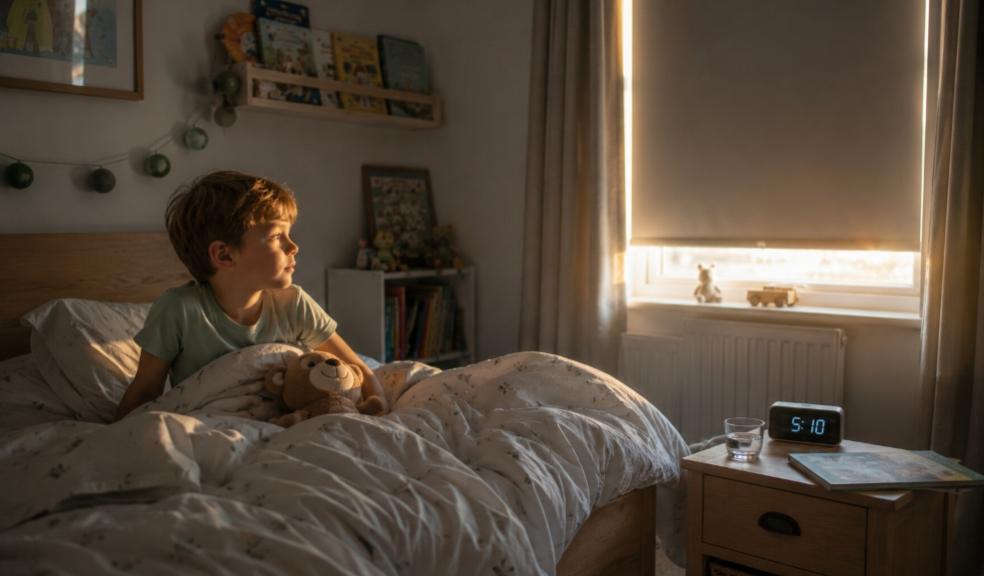
The 5am Wake-Up: How Much Daylight Is Really Reaching Your Child's Room
Every parent who has been up at five since April has had the same conversation with themselves. She used to sleep until seven. Nothing has changed. Except the light has changed, by about two hours, and nobody warned you it would be the thing that undid the routine.
Before you rearrange bedtimes again, it is worth doing something more boring and more useful. Go into the room at the time your child actually wakes, and look at it properly.
Do the audit at five, not at nine
A bedroom assessed in the middle of the day tells you nothing. At nine in the morning the curtains look fine because everything looks fine.
At five you can see where the light is arriving from, and it is almost never through the curtain fabric. It is over the pole, down the sides, along the gap where two panels meet, and off a pale wall opposite the window that bounces it into the cot. Stand where your child's head is. That is the only viewpoint that counts.
Write down the three brightest points. Those are your targets, and they will not all be solved by the same thing.
The fabric is rarely the problem
Most families have already bought a blackout curtain by this stage, and it did something without solving it. That is the expected result. A curtain hangs outside the window opening, so it cannot seal against anything, and light travels around the edges regardless of how dense the lining is.
A blind fitted inside the recess starts from a better position, because it can be made to the exact width of the opening. The 1 Click Blinds' honeycomb blackout blind is built for that job, with a cell structure that blocks light through its own thickness rather than relying on a coating, and it sits against the frame instead of in front of it.
There is a second effect that parents mention more than the first one. Those closed cells hold a layer of air at the glass, which takes the edge off a room that gets hot in the afternoon and cold by morning. A child who is too warm at four wakes at four.
Heat, not just light
While you are in there, put your hand on the glass and then on the wall beside it. If the difference is obvious, temperature is part of your problem and no amount of blackout fabric will touch it.
South and west facing children's rooms are the usual offenders. They bake through the afternoon, hold that heat into the evening, then lose it fast overnight, which gives you a child who is too hot at bedtime and too cold at dawn. Anything that insulates the window helps at both ends.
Cords, and why the answer is simply not to have them
One thing worth being firm about. Any blind in a child's room should have no accessible cord or chain, full stop. Not tied up, not clipped high, not out of reach today. Absent.
That rules out a fair number of otherwise sensible products and it should. Cordless options exist across most blind types now, so this is a specification you can insist on rather than a compromise you have to make.
What to expect, honestly
A properly fitted blackout blind will not turn a five o'clock waker into a seven o'clock sleeper overnight. Body clocks take a week or two to shift, and some children wake early because they are children.
What it will do is remove light as a variable, so that when you are troubleshooting the next thing you are not troubleshooting three things at once. If you want to compare fabrics and fittings before measuring, the wider blackout blinds for a child's room selection is a reasonable place to start.
Fix the window first. It is the only part of the bedtime routine that does not negotiate.
Still Waking at 5am? 8 Other Things Worth Checking
Of course, sometimes you can make a child's bedroom beautifully dark and still hear those little footsteps coming down the hallway at an hour nobody should reasonably be awake.
Early waking can have lots of different causes, and sometimes it's a combination of a few small things rather than one obvious problem. If you've tackled the daylight but mornings are still starting far too early, here are a few other things worth looking at.
1. Their bedtime might actually be too late
It sounds completely backwards, but keeping an early riser up later doesn't always result in a later morning. An overtired child can actually sleep less soundly and wake earlier.
If bedtime has gradually crept later over the summer, try bringing it forward by 15–30 minutes for several nights and see what happens rather than immediately pushing it later.
2. They could be going to bed too early
Annoyingly, the opposite can also be true! Children only need a certain amount of sleep within 24 hours, so if your child has genuinely had enough by 5am, you may need to look at their overall sleep pattern.
Consider bedtime, naps and morning wake-up together rather than focusing on 5am in isolation.
3. Their nap needs may be changing
Toddlers in particular can suddenly start waking earlier when their daytime sleep changes. A long afternoon nap, a nap that's happening too late in the day or being ready to drop a nap altogether can all affect nighttime sleep.
Rather than removing naps immediately, try adjusting the timing or shortening them gradually and see whether mornings improve.
4. They're hungry
Dinner can feel like a very long time ago at five in the morning, particularly for growing children.
If your child regularly wakes saying they're hungry, look at what they're eating in the evening. A filling dinner or appropriate bedtime snack containing some protein and slow-release carbohydrates may help them stay satisfied for longer.
5. Something is waking them
We become surprisingly good at sleeping through our own household noises. Your child may not be quite so accomplished.
Listen for heating systems switching on, birds outside the window, bins being collected, a neighbour leaving for work, doors closing or even somebody else in the house getting up. A consistent background sound such as white noise can sometimes help mask unpredictable early-morning noises.
6. Their room temperature is changing overnight
A bedroom that feels perfectly comfortable when you put your child to bed may feel very different six or eight hours later.
Check the temperature around the time they're actually waking rather than just at bedtime. Seasonal changes, heating schedules and early-morning temperature drops can all make a difference.
7. 5am has accidentally become morning
This one can creep up on you. Your child wakes at five, comes into your room, gets a cuddle, watches television or eventually persuades someone to make breakfast. Before long, their body has learned that 5am is when interesting things start happening.
Keeping everything dark, quiet and spectacularly boring until an agreed morning time can help reinforce the difference between waking briefly and actually starting the day. For children old enough to understand one, an okay-to-wake clock can also give them a clear visual cue.
8. Their body clock may simply need time to adjust
Long summer evenings, early sunrises, holidays and changes to everyday routines can all shift children's sleep patterns.
Once you've made changes, give them a little time before deciding they haven't worked. Keeping bedtime and morning routines reasonably consistent for a week or two gives their body clock a chance to catch up.
And Sometimes, Early Risers Are Just Early Risers
This is perhaps the least satisfying answer when you've already been awake for two hours before breakfast, but children do have different natural sleep patterns.
The aim doesn't necessarily have to be turning every 5am child into a 7am child. Sometimes getting from 5am to 5.45am is a win, or teaching an older child that waking up doesn't mean the entire household needs to get up too.
Start with the things you can control — light, temperature, noise, bedtime and routine — change one or two things at a time, and give each change enough time to see whether it makes a difference. If your child's sleep pattern changes suddenly, they're regularly distressed or uncomfortable at night, they snore heavily or you're concerned about their sleep for any reason, it's worth speaking to your GP or health visitor.