

The New Social Media Ban for Under-16s: As a Mum of Tweens, I'm Not Sure It's That Simple
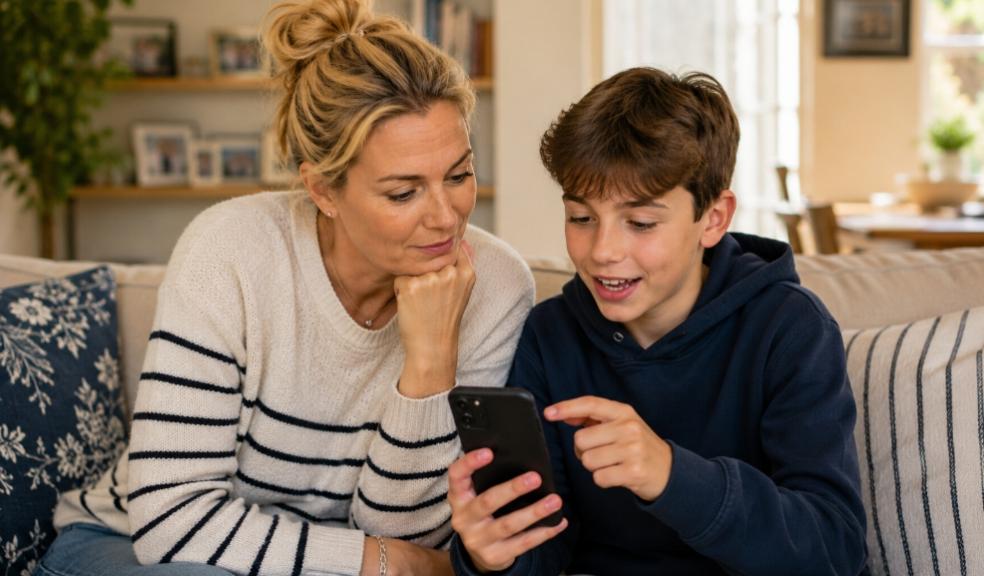
Last week my 11-year-old son casually dropped into conversation that he'd set up a WhatsApp Channel.
It wasn't a big announcement or some dramatic reveal. In fact, he seemed slightly confused by my reaction. Apparently some of his classmates had created their own channels, so he'd decided to have a go too.
My response was something along the lines of, "A WhatsApp what now?"
Now, I had vaguely heard of WhatsApp Channels before, but I'd always thought they were more of a business thing. The sort of thing companies, news organisations and content creators used. I'd certainly never considered that children would be creating their own. While Oscar carried on chatting away as if this was completely normal, I sat there having a minor parenting crisis and wondering what else had appeared that I hadn't heard about yet.
That moment really stuck with me because, if I'm honest, I thought I was doing a reasonably good job of keeping up with technology. We talk about online safety regularly, I know what apps my children are using and I take an interest in what they're doing online. Yet there I was, being introduced to something new by my 11-year-old.
It's probably why the recent discussions around a possible social media ban for under-16s caught my attention. Like most parents, I completely understand why the conversation is happening. But the more I think about it, the more I find myself sitting on the fence.
I Understand Why Parents Are Worried
I don't think you'll find many parents arguing that social media is perfect.
There are genuine concerns around online safety, bullying, unrealistic beauty standards, harmful content and the pressure that comes with constantly comparing your life to other people's carefully edited highlights. As a mum of a son and daughter who are just entering the tween years, I have those worries too. In fact, if we're being completely honest, there are days when making social media disappear altogether sounds quite appealing.
But every time I hear somebody talking about banning social media for under-16s, I find myself asking the same question.
How exactly would that work?
Maybe this is where my tendency to play devil's advocate comes out, but children are incredibly smart when it comes to technology. Most of us have asked our children how to do something on a device at some point and been shown a shortcut we'd never discovered ourselves. So while I completely understand the intention behind a ban, I'm not entirely convinced it solves the problem.
In fact, part of me worries it could create a different one.
Better The Devil You Know
The phrase that keeps popping into my head is "better the devil you know."
Perhaps that's because I'd rather spend my time understanding platforms that I already know exist than trying to keep up with entirely new corners of the internet.
If social media is banned, are children simply going to shrug their shoulders and move on? Or are they going to find ways around it?
My instinct says it's probably the second option.
I've read stories about countries where restrictions have already led to children looking for workarounds, and that worries me more than the platforms themselves. Suddenly we're talking about VPNs, hidden accounts and online spaces that many parents know even less about.
Maybe I'm completely wrong, but if my choice is between trying to understand Instagram and trying to understand whatever replaces it, I'd probably choose Instagram.
At least I know where to start.
Are Parents Really Facing Something New?
One thing I've been thinking about a lot is whether parents today actually have it harder than previous generations, or whether we simply have a different set of challenges.
When I was growing up, people were convinced television was rotting our brains. Then it was video games. Then the internet arrived and everyone panicked about that too.
I'm not saying today's concerns aren't real because they absolutely are. Social media brings challenges that previous generations didn't have to deal with. But parenting has always involved trying to understand something new that our children are interested in.
Perhaps this is just our generation's version of that.
I sometimes hear parents talking as though it's impossible to keep up with technology, and while I completely sympathise because I feel overwhelmed by it too, I also think we have to accept that understanding what our children are doing has always been part of the parenting job description.
Not because we need to know everything. That's impossible.
But because taking an interest matters.
The truth is, I let things slide all the time. I'm human. Some weeks I'm completely on top of things and other weeks I'm focused on school, work, sports clubs and everything else life throws at us. There is no point pretending I'm permanently up to date because I'm definitely not.
My children have actually taught me more useful things on Microsoft Word and Canva over the last year than I've taught them. Oscar also showed me a trick to skip a particularly annoying YouTube advert recently, which I was very grateful for!
The older they get, the more I suspect they'll always be one step ahead of me when it comes to technology.
Social Media Isn't All Bad
This is probably where my opinion differs from some people.
I actually think social media and technology can be fantastic when they're used well.
Take YouTube for example. I know it gets criticised a lot, and I completely understand why. We've certainly noticed that if our son spends too much time watching endless YouTube Shorts, his mood isn't great afterwards. It's almost like his brain has been switched into overdrive.
But I see that as part of my role as a parent. Helping him recognise how certain content makes him feel and encouraging him to make better choices himself.
At the same time, YouTube has brought plenty of positives into our house too.
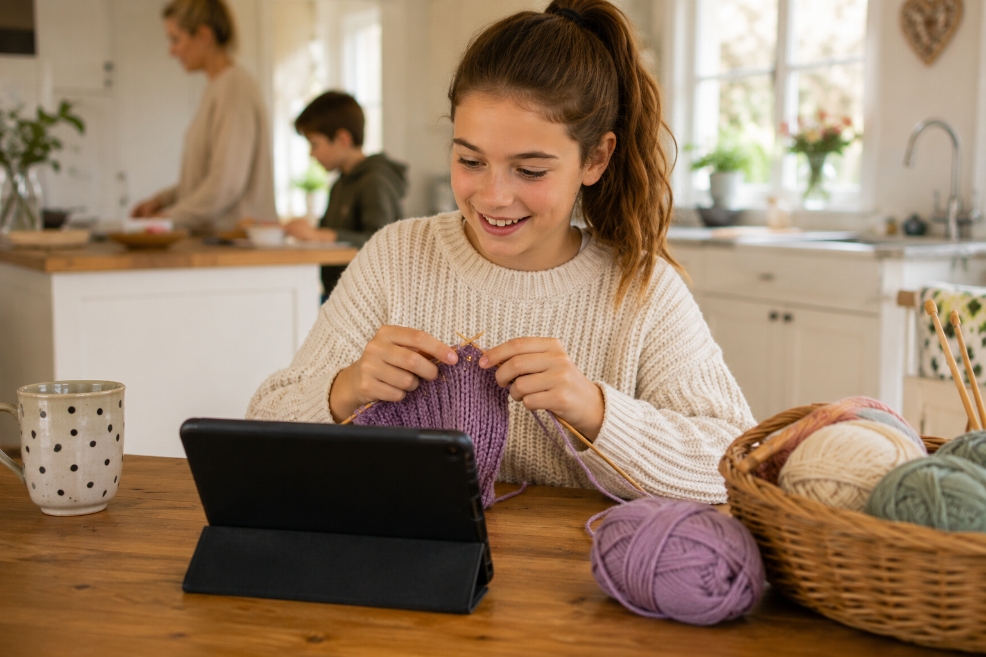
My son loves watching sports highlights, particularly football and golf. My daughter has taught herself to knit through videos online, which is particularly impressive because I definitely don't have the skills to teach her myself.
Social media and technology aren't all good or all bad. Like most things in life, they're somewhere in the middle.
What Matters More Than Any App
If I had to choose one thing that matters most when it comes to keeping children safe online, it wouldn't be parental controls, app settings or knowing every new trend.
It would be communication.
Our children have smartphones and devices, but they use them downstairs where we can see them. Any new apps have to be approved first. Although they often refer to them as "their" phones or "their" iPads, we make it very clear that they are our devices and we have the final say.
But the conversations matter far more than the rules.
One of the best examples happened when Oscar accidentally added someone online who he thought he knew. After chatting briefly, he realised he didn't actually know the person and came straight to us.
I'll admit my first reaction wasn't perfect. I panicked.
In my head, I was already imagining every worst-case scenario possible.
Thankfully, my husband is usually the calmer one in these situations. Once he'd told me to stop panicking, he asked Oscar a very simple question.
"Do you actually know why we don't want you talking to strangers online?"
To our surprise, Oscar said he didn't.
Of course he knew it was a rule, but he hadn't fully understood the reason behind it.
What followed was probably one of the best conversations we've ever had about online safety. We talked about how people aren't always who they say they are online and how some people pretend to be children to gain trust.
The thing that stuck with me afterwards wasn't that he'd made a mistake.
It was that he'd felt comfortable enough to tell us about it.
That one conversation taught him more than any parental control ever could.
My Final Thoughts
The biggest thing my children have taught me over the last year is that I will never have all the answers, and that's OK.
Every time I think I've finally got my head around a platform, feature or trend, something new appears. That's probably always going to be the case.
So while I completely understand why a social media ban appeals to many parents, I'm not convinced it's the answer. Partly because I'm not sure it's realistic, and partly because I worry we could end up pushing children towards online spaces that parents understand even less.
Personally, I'd rather spend my time talking to my children, setting sensible boundaries and helping them learn how to use technology responsibly.
And if you're feeling overwhelmed by all of this, you're definitely not alone.
Talk to your partner. Talk to other parents on the school run. Talk to grandparents, colleagues, friends and family members. Listen to different perspectives and take away the bits that resonate with you.
Because if there's one thing I've learned from parenting tweens, it's that none of us have this completely figured out.
We're all just trying to keep up.