
How to Protect and Store Finished Wooden 3D Puzzles
You've spent hours on a detailed wooden 3D puzzle. The last thing you want is to watch it warp, crack, or collect dust in some forgotten corner. Finished models deserve proper care, yet most guides skip what matters most: the aftercare. Whether you've built a miniature cityscape or an intricate mechanical model, what you do right after assembly genuinely affects how long the piece lasts.
Why Wooden 3D Puzzles Make Great Family Projects
Wooden 3D puzzles aren't just satisfying to complete—they're also a wonderful screen-free activity for families. Whether you're helping a younger child follow the instructions or working alongside an older child on a more challenging design, building together encourages patience, problem-solving, and teamwork.
For many families, the finished model becomes more than just a puzzle. It represents hours spent chatting, laughing and working towards a shared goal. That's exactly why it's worth taking a little extra time to protect your finished creation, so your child can proudly display it or even pass it on to younger siblings in years to come.
Turning a Finished Puzzle into a Family Keepsake
Many children become incredibly attached to something they've spent days building. Rather than taking it apart immediately, consider making the completed puzzle part of your home's display. Placing it on a bookshelf, in a bedroom, or in a family games room celebrates your child's achievement and helps build confidence.
You could even take a photograph of your child with their completed model before moving on to the next project. Over time, these photos become a lovely record of growing skills and family memories.
Protecting Your Finished Model from Damage
Wooden puzzle models face real threats. Moisture makes wood swell and warp; direct sunlight bleaches surface detail and weakens glue joints; dust settles into grooves and gradually degrades the finish. Getting ahead of these problems is the key to prevention. Figured'Art’s 3D puzzle sets are a solid starting point if you want to see what quality wooden construction looks like; the same care principles apply once you're done building.
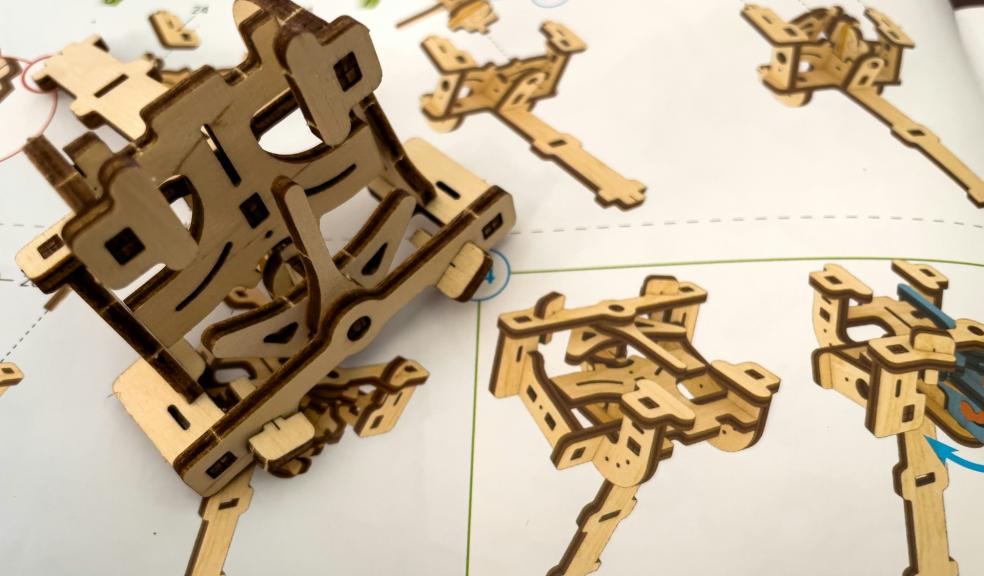
Before applying any sealant or choosing a display spot, inspect the model for loose joints. Press each connection gently. If a tab feels unstable, apply a small drop of PVA or wood glue and let it dry completely before moving forward. Skip this, and you'll end up with failed joints that no sealant can fix. A solid, properly joined model protects far more easily than a fragile one.
How to Seal a Wooden 3D Puzzle Properly
A clear sealant is your best defence against moisture and minor knocks. Acrylic varnish in a matte or satin finish works well on laser-cut wood; it soaks into the grain without hiding surface detail. Apply the sealant in thin coats using a soft, flat brush:
- Work in a well-ventilated area, away from direct sunlight.
- Apply the first coat lightly, then leave it to dry for at least two hours.
- Sand very gently with fine-grit sandpaper (320-grit or higher) between coats.
- Apply a second coat and let it cure fully overnight before handling.
Spray sealants work better for models with very fine details or moving parts, since a brush can catch on delicate tabs. Keep the can at least 25 to 30 centimetres from the surface and use short, sweeping passes. Don't apply thick coats; runs or pooling in recessed areas will cloud the finish and add unwanted weight to the model's joints. Two thin coats always beat one heavy one.
Should Parents Apply the Sealant?
If younger children helped build the puzzle, it's best for an adult to handle any varnishes or spray sealants. Although many products are low odour, they should still be applied in a well-ventilated space and allowed to cure fully before children handle the model again.
Making sealing the final "grown-up" step also gives children a chance to learn how crafts and wooden projects are preserved, introducing them to basic care and maintenance skills.
Protecting Against UV and Humidity
Ultraviolet light damages wooden models slowly but relentlessly. Even indirect sunlight through a window yellows the wood over time and breaks down the adhesive holding everything together. Display your puzzle in a spot with no direct sun, or fit a UV-filtering film to nearby windows. Glass display cases with UV-filtering panels offer the strongest protection; they also keep dust off.
Humidity is equally problematic. Wood absorbs moisture from the air and expands, then contracts again as conditions shift. In the UK, where humidity swings considerably between seasons, this cycle stresses joints repeatedly over months and years. Keep the room between 40 and 60 percent relative humidity if you're able to; a small digital hygrometer costs very little and shows you the reading at a glance. Don't display models near radiators, windowsills, or in bathrooms, all three create humidity spikes or rapid temperature swings that accelerate joint failure.
How to Store Finished Wooden 3D Puzzles Safely
Storage is just as critical as display. If you're not keeping the model on show, you need an approach that protects it from pressure, dust, and environmental shifts over months or even years. The wrong method, wrapping a model loosely in newspaper inside an uncovered box, causes more damage than leaving it on a shelf. Acidic paper degrades wood over time and can stain or weaken the surface; always use acid-free materials instead.
Choosing the Right Container and Wrapping
A rigid box beats a soft bag because it stops other items pressing against the model and deforming its parts. Choose a box slightly larger than the model so you can pad it without squashing any protruding elements. For wrapping, use:
- Acid-free tissue paper around the entire model.
- A layer of bubble wrap over the tissue for cushioning.
- Foam padding or crumpled acid-free tissue inside the box to stop the model from shifting.
Write the model's name and storage date clearly on the box. If you have multiple pieces or detachable sections, bag each one separately in small zip-lock bags before placing them in the main container. Don't stack heavy items on top of the storage box; persistent pressure over time bends and eventually snaps thin wooden joints that survived the build just fine.
Long-Term Storage Conditions
The environment where you store the box matters as much as the box itself. A cool, dry, dark space is what you're after. Loft spaces get very hot in summer and very cold in winter, both of which stress wood fibres; an interior cupboard on a ground or first floor works much better. Avoid garages and garden sheds, which tend to get damp in the UK. Place the box on a shelf rather than directly on the floor; floor-level storage exposes items to any minor flooding or condensation.
Check stored models every three to six months. Open the box, look for signs of warping or mould, and let it air for thirty minutes before resealing. If you spot any joint creep, a small amount of fresh wood glue applied and clamped overnight usually restores the connection without any visible damage to the finished surface.
Making Wooden Puzzles Part of Your Screen-Free Activity Collection
If your family enjoys jigsaws, LEGO®, crafts or model building, wooden 3D puzzles are another brilliant option for rainy weekends and school holidays. They're ideal for encouraging concentration, perseverance and creative thinking, while giving parents and children an opportunity to spend quality time together without screens.
Once you've invested time building a model together, protecting it properly means those memories last much longer than the afternoon it took to complete.
Conclusion
Protecting and storing a finished wooden 3D puzzle isn't rocket science, but it does mean making deliberate choices at each stage. Seal the model with acrylic varnish before display; control humidity and UV exposure in the room; use acid-free materials with a rigid container for long-term storage. The effort you put into protecting and storing your finished wooden 3D puzzles directly determines how long your work stays in good condition. A well-cared-for model looks just as sharp five years after assembly as it did the day you finished it.