

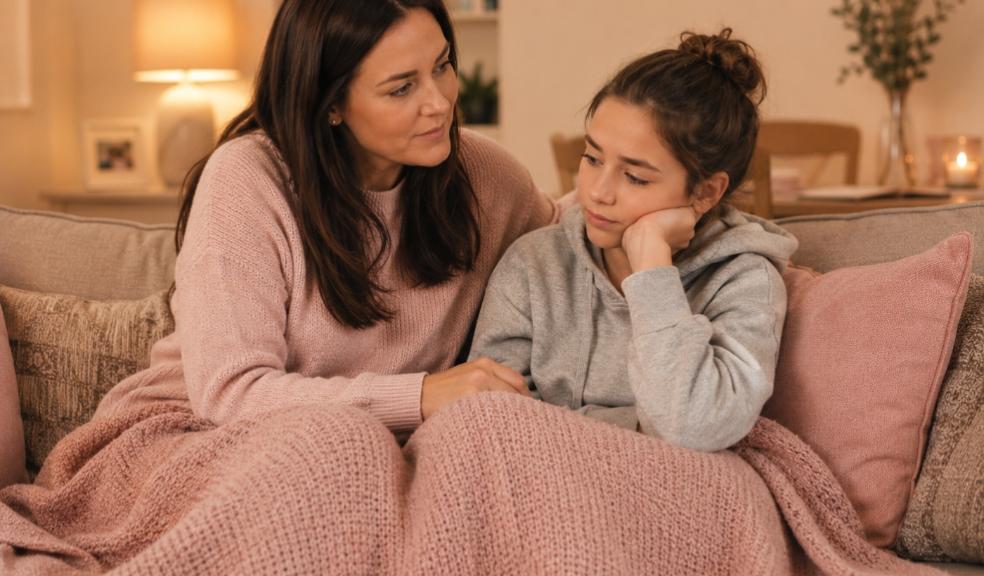
When Perimenopause Meets Puberty: The Family Stage Nobody Warns You About
"Isn't it unfair that perimenopause symptoms seem to start at exactly the same time as your kids' hormones?"
The words came out of my mouth while sitting on a sports hall bench after what should have been a completely ordinary parenting drama involving forgotten trainers.
At the time, I meant it as a joke.
But the more I thought about it afterwards, the more I realised I might have actually stumbled across one of the biggest parenting challenges nobody talks about.
Because while I've spent years reading books and preparing myself for the tween and teenage years, I hadn't really considered the possibility that I might be navigating my own hormonal rollercoaster at exactly the same time.
And suddenly, a lot of things started making sense.
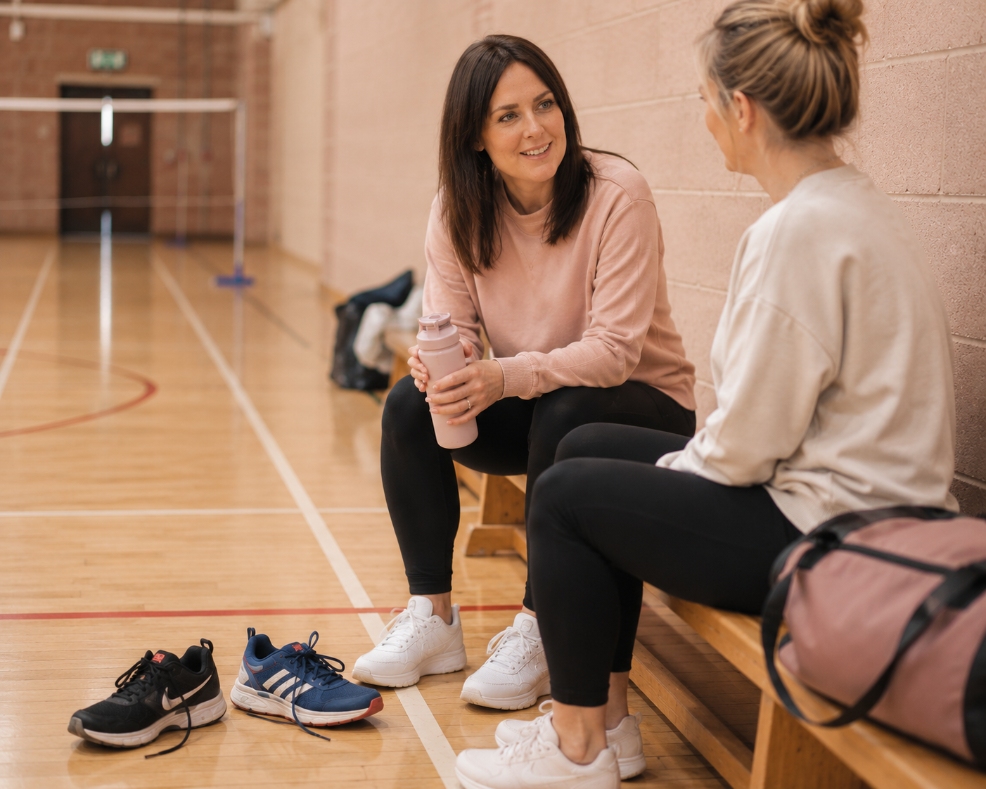
The Trainer Drama That Started It All
Looking back, the trainer situation really wasn't that big a deal. My daughter had left her trainers at school, which meant borrowing a pair from her brother. Simple. Except apparently not.
The borrowed trainers were too big, too itchy, looked wrong and felt wrong. There were tears, frustration and a lot of discussion about footwear considering we were already running late. We eventually left the house with her wearing one trainer from each pair while she decided which one she disliked least. By this point I was stressed, she was stressed and her brother was doing his best to pretend he wasn't related to either of us.
At the time, I was completely exasperated. But if I'm honest, I don't think it was really about the trainers. It was one of those moments where I could see that her reaction was bigger than the problem itself.
And if I'm being even more honest, my reaction probably was too.
That's what got me thinking about that conversation on the sports hall bench. Because while I've spent years preparing myself for my children's hormones, I hadn't really considered the fact that my own hormones might be throwing their hat into the ring too.
I Thought I Was Prepared for This Stage
The funny thing is, I genuinely thought I was ready for the tween and teenage years. I've read the books, I've listened to the podcasts, I've spoken to friends with older children. I knew there would be bigger emotions, friendship dramas, frustrations and growing independence.
What I didn't prepare for was the possibility that I might not be feeling quite like myself at the same time. I'm 39 and if I'm honest, I thought I had more time before perimenopause became something I needed to think about. Like many women, I had a vague idea that it was something that happened in your mid-forties, not now.
Not while I was still trying to navigate school runs, sports clubs and working out what everyone wanted for dinner. But over the last year or so, things have started to change.
My periods, which were always incredibly regular, seem to be making up their own rules these days.
My mood feels much more up and down.
My brain can feel foggy.
My patience seems shorter than it used to be.
And can we also talk about the fact that my makeup suddenly refuses to stay on my face? Because honestly, that one feels particularly unfair.
What Is Perimenopause?
Perimenopause is the stage leading up to menopause when hormone levels, particularly oestrogen and progesterone, begin to fluctuate.
Although many women associate menopause with their late 40s or 50s, perimenopause can begin much earlier. For some women, symptoms can start in their late 30s or early 40s.
Symptoms can include:
- Irregular periods
- Mood changes
- Increased irritability
- Anxiety
- Brain fog
- Poor sleep
- Hot flushes
- Changes to skin and hair
- Fatigue
- Feeling overwhelmed more easily
For me, one of the biggest surprises has been how much the emotional side has affected me.
What Happens During Puberty?
At the same time many mums are experiencing hormonal changes, their children may be entering puberty.
Puberty is another period of huge physical, emotional and hormonal development.
Children can experience:
- Mood swings
- Frustration
- Increased sensitivity
- Worry and anxiety
- Changes in confidence
- Emotional outbursts
- Difficulty regulating feelings
On top of that, their brains are still developing. The parts of the brain responsible for emotional regulation, impulse control and decision-making are still maturing.
In other words, there is a lot going on. As parents, we often expect the physical changes of puberty but what I wasn't fully prepared for was the emotional side.
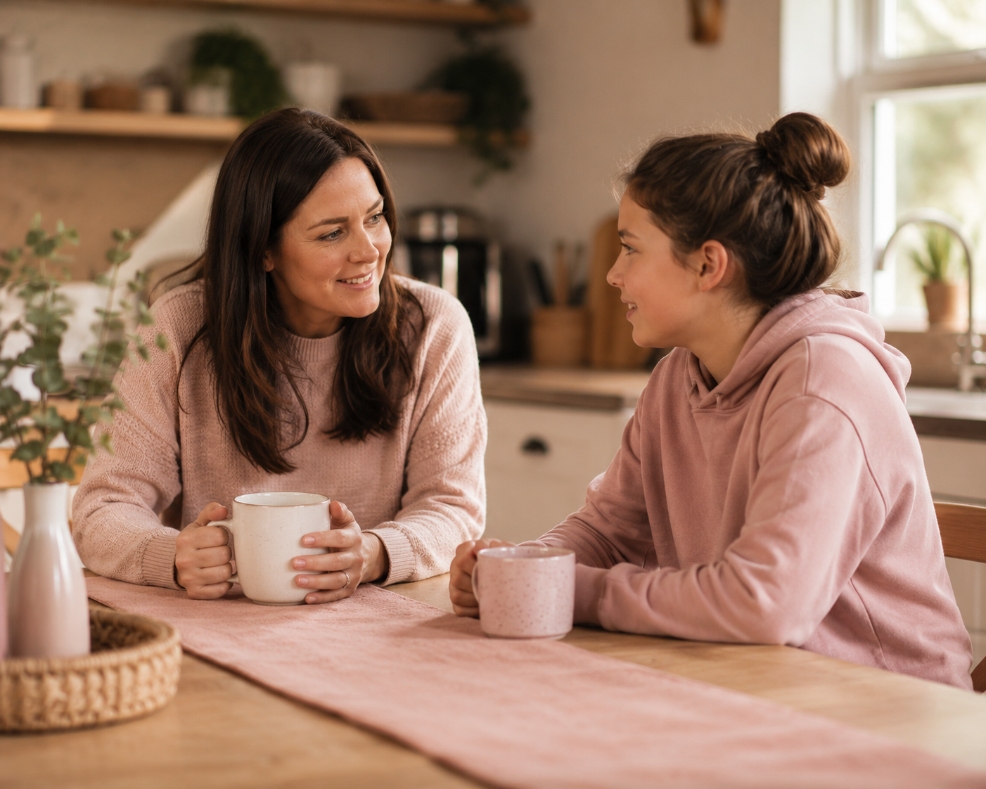
Why These Stages Often Collide
As I started reading more about perimenopause, one thing became obvious. Many women begin experiencing symptoms at exactly the same time their children are beginning puberty.
Suddenly, you have a household where multiple people are dealing with fluctuating hormones, changing emotions, poor sleep and increased sensitivity. No wonder things can feel intense. In our house, I have an 11-year-old son and a 9-year-old daughter and they are showing completely different signs of growing up.
My son often struggles with frustration and managing negative emotions, particularly around sport, whereas my daughter can be like an emotional rollercoaster. She is still the happiest, funniest girl to be around, but small things that wouldn't have bothered her before can suddenly feel enormous. The funny thing is that some days I feel exactly the same.
Signs Perimenopause and Puberty Might Be Colliding In Your House
Every family is different, but some common signs include:
Everyone seems more emotional than usual
Tears appear more quickly.
Frustrations build more easily.
Small disagreements suddenly feel much bigger than they should.
You find yourself snapping more often
One thing I've noticed is that the situations haven't necessarily changed, the difference is my ability to cope with them.
The requests from my children are often exactly the same as they've always been, the challenge is that I feel like I have less capacity to deal with them.
Rushing becomes a disaster
I've realised that many of our biggest family arguments happen when we're trying to leave the house. Apparently, the exact moment I discover we're running late is also the moment my daughter decides she would like elaborate hairstyles and lengthy discussions about footwear.
Everyone is tired
Children's sleep patterns change during puberty and perimenopause can affect sleep too.
When nobody is getting the rest they need, emotions tend to sit much closer to the surface.
You feel overwhelmed by things that never used to bother you
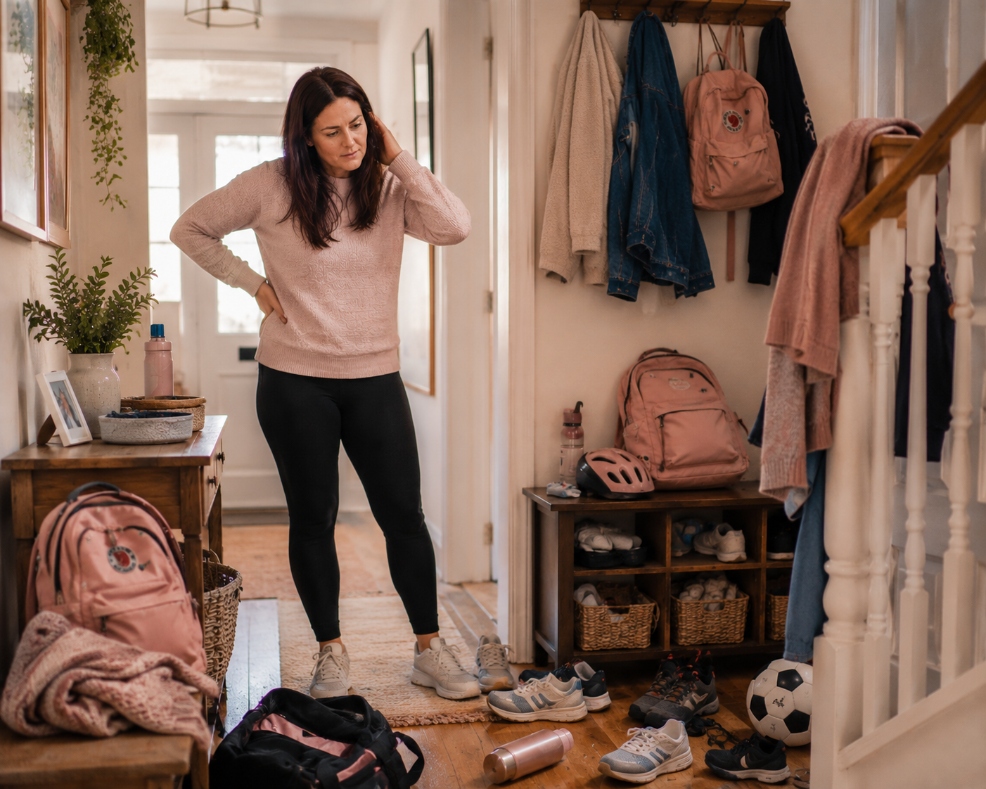
Our house has always been busy. We've always had sports clubs, school bags, kit, trainers and water bottles scattered around, but recently it feels like THERE'S STUFF EVERYWHERE.
Logically, I know there probably isn't much more clutter than before. Emotionally, it sometimes feels impossible to think about anything else.
The Part Nobody Talks About
One of the hardest parts for me hasn't been the physical symptoms, it's been the sadness. Being a mum is all I've ever wanted, I love it. So, when I find myself reacting in ways that don't feel like me, it can be heartbreaking. When my son asks if it's okay to ask me something because I look busy, or I find myself snapping over something that wouldn't normally bother me, I don't just feel frustrated I feel sad. Watching my children grow up is so amazing, watching their personalities shine through and them become more confident and independent brings a lot of pride and I don’t want them to look back on these exciting times and think, jeez mum was pretty grumpy then! I love watching them do all of their hobbies and I never want them to think that I’m too busy or overwhelmed to make time for them, but I feel like that’s the view they’re getting right now.
I've spent a lot of time recently feeling guilty about moments where I've snapped or lost patience. I've worried that I'm not being the mum I want to be, but I've started to realise something important. Perhaps I'm not grieving the loss of myself, perhaps I'm grieving the end of a chapter. The chapter where my children were little, the chapter where I could solve most problems with a cuddle, a snack or finding the missing toy. The challenges look different now, the emotions are bigger and the problems are more complicated. And maybe part of being a parent of tweens and teens is accepting that our role changes too.
From Manager to Mentor
Whilst researching this article I came across a line that says around this age you move from Manager to Mentor, and that stuck with me.
Parenting up until this point has been full of problems that I can solve. I can fix broken toys, get them food when they’re hungry and find the things they are looking for. Injuries can get a magic mummy kiss and plasters put on and I have mostly been able to answer all of their questions. Now we are heading into the tween/teen years the challenges are bigger, more emotional and don’t often have easy fixes. Friendship dramas are very real and almost all of them happen when you aren’t with them to walk them through it. Sports and activities get more intense, which can lead to pressure and frustration. When something goes wrong on the court now my son no longer looks to me for a quick hug and bit of reassurance, but I can see him playing things over in his head and trying to work out how to pick himself up.
My role is no longer about managing everything, I’m slipping into more of a mentor position. My role now isn’t to fix all of my children’s problems, it’s to try and give them the best tools and support to manage these challenges alongside me, then eventually on their own (gulp!).
What Has Actually Helped Us
We're still figuring this out, but there are a few things that have helped.
Get the basics right
Honestly, I used to get so frustrated whenever you had an issue and people kept banging on about having a healthy diet, drinking lots of water, sleeping well and getting outside! But I really get it now. I genuinely don’t feel great if I’m eating rubbish on a regular basis and not getting outside, and I do really notice it in my children too. Even putting devices down and going for a 10 minute walk around the block can help brighten our moods. We bought water bottles with times of day on so we could challenge ourselves to try and drink more water and I have to give myself a reboot every now and again to make better family meals as it’s so easy to slip into making food that is more convenient but less nutritious.
Look into Vitamins and Supplements
I have tried a couple of menopause Supplements and have found them to be really beneficial at curbing symptoms in the beginning. No endorsements here, but I have reviewed Happy Mammoth and also tried the Feel Vitamins if you wanted to read some honest reviews. I started taking these a while back and wasn’t sure the cost was worth it for what I was getting, but 1 week after stopping my husband practically got down on his knees and begged me to order some more! When they arrived he ripped open the box and tried pouring the contents of the bottle straight into my mouth, so I won’t be stopping them any time soon.
Talking openly
We talk about hormones quite a lot in our house. My children know that if I snap, it's often because I'm struggling, not because they've done something wrong.
As well as talking to your immediate family, make sure you are chatting to friends as well. Menopause is still a bit of a taboo topic and I often see people look at me with shocked faces when I mention it initially, but most of the time the person I’m talking to then goes on to say that they are actually experiencing it too and we can have a good old rant, which always makes me feel much better!
Do your own research
I love finding new podcasts and there are some great ones that share advice and discussions from both professionals in the know and parents in the trenches. You can learn so much from these. I also found a book which honestly changed my whole view on parenting teens, so I would really recommend ‘Not a Survival Guide’
Apologising
When I get things wrong, I apologise. I don't think being a good parent means getting everything right, I think it means showing our children what repair looks like afterwards.
Taking a break before reacting
Sometimes I need ten minutes to myself to try and reset. Sometimes my daughter wants closeness when I need space, which can be really challenging but we're learning to navigate that together.
Reducing rushing where possible
One simple change that has helped enormously is me getting up about an hour before the children. Having an hour to myself before the morning chaos begins means I start the day feeling calmer and more capable, so when someone has lost a trainer and it’s a PE day I have the time and focus to help them find it.
Being kinder to myself
This is probably the biggest lesson I'm learning. If another mum told me she was exhausted, overwhelmed and struggling with hormonal changes while parenting children going through hormonal changes of their own, I would immediately tell her to give herself some grace. I'm trying to learn to offer myself the same kindness.
Conclusion
If any of this sounds familiar, please know you're not alone. There are families all over the country navigating this same stage. There are mums sitting in sports halls, outside dance classes, in school car parks and at kitchen tables wondering why everything suddenly feels harder than it used to.
The truth is that everyone in the family is changing. Your children are growing and you are changing too. That doesn't mean you're failing, it doesn't mean you've lost yourself, it simply means you've entered a new chapter.
Maybe that's what this stage is really about.
Not learning how to manage every situation for our children, but helping them learn how to navigate life's challenges for themselves.
And perhaps while they're learning that, we're learning something too.
That we don't have to get through this stage perfectly.
We just have to get through it together.