

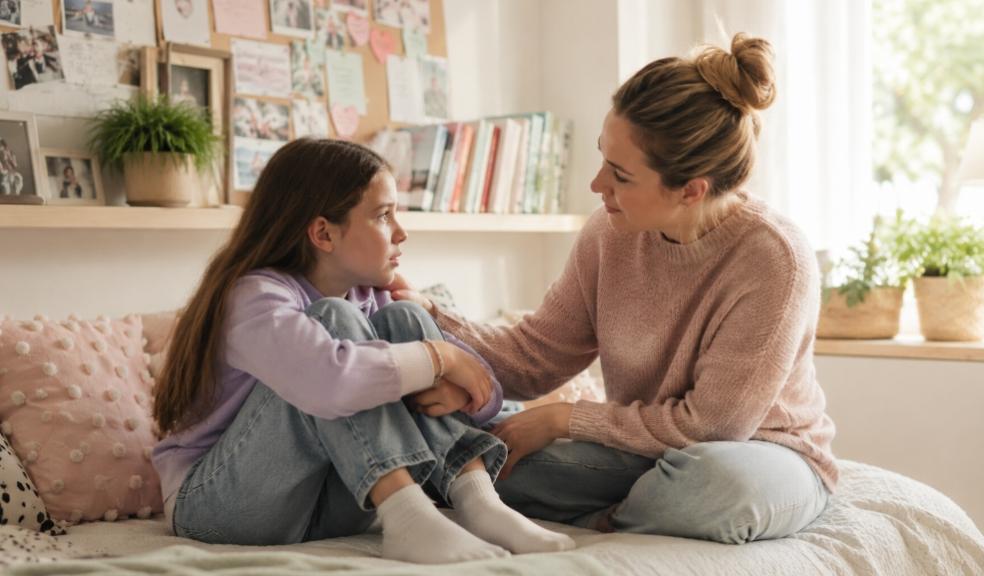
Why Are Girls' Friendships So Intense? The Psychology Behind Primary School Friendship Drama
I don't know if it's just my daughter, but Year 4 seems to have unleashed a whole new level of friendship drama.
My son is in Year 6 and his friendships have always been fairly straightforward. They play football, they annoy each other, they argue... and then they move on.
My daughter, meanwhile, seems to be navigating a social world so complicated that even I struggle to keep up.
One day someone is her best friend. The next day they're not speaking. By Friday they're best friends again.
Honestly, half the time my son looks at us both as if we're discussing international politics.
The thing that surprised me most wasn't actually the drama itself. It was how much it affected her.
This is a child who can walk onto a gymnastics floor and perform in front of hundreds of people without blinking, yet being called "silly" by another eight-year-old can reduce her to tears. How does that make any sense?
As it turns out, quite a lot of it comes down to psychology.
Friendships Start Becoming About Belonging
When children are younger, friendships tend to be based on play. Who wants to play tag? Who likes colouring? Who wants to build a den?
But somewhere around the age of eight or nine, friendships start becoming about something much bigger: belonging.
Children stop looking for people to play with and start looking for people who understand them. That's why friendship groups often get smaller, why being left out suddenly hurts so much, and why a friendship fallout can feel completely devastating.
They're not just losing someone to play with anymore. They're questioning where they belong.
Once I understood that, so much of my daughter's behaviour suddenly made sense.
The "Best Friend" Stage
One thing I've definitely noticed is the rise of the "official" best friend.
Gone are the days when apparently everyone was her best friend. Now there seems to be one person holding that title and the emotional stakes have become significantly higher.
The phrase, "She's not my best friend anymore," can create enough tears to rival a Disney film.
My son's response is usually something along the lines of, "I thought she was your best friend yesterday?" Which, to be fair, is a perfectly reasonable question.
The psychology behind all of this is actually fascinating. Girls this age are beginning to practise some very grown-up relationship skills. Trust. Loyalty. Conflict. Jealousy. Forgiveness.
The problem is they're learning all of this with the emotional regulation of a child.
Someone once described it as "adult-sized emotions with child-sized coping skills" and honestly, I've never heard a better description.
What I'm Learning as a Parent
One thing I'm trying very hard not to do is get swept up in every friendship drama. Mostly because I've learned the hard way that the child causing tears today could easily be the child she's laughing with tomorrow.
As parents, it's incredibly tempting to jump in and fix things. I've definitely had moments where I've wanted to tell my daughter exactly who she should and shouldn't spend time with.
But the more I learn about friendships, the more I realise this is an important stage of development. She's learning skills that she'll use for the rest of her life.
Instead of focusing on who did what, I'm trying to focus on something much more important: how different friendships make her feel.
I've also become a huge believer in helping children build friendships in lots of different places. School friendships matter, but so do gymnastics friendships, club friendships and neighbour friendships. The more places children feel they belong, the less pressure gets put on one single friendship group.
There Are Positives Hidden in the Drama
Whilst I'd happily skip some of the tears and drama, I can also see some positives emerging.
I'm seeing resilience when friendships don't go to plan. I'm seeing empathy when my daughter notices another child has been left out and makes an effort to include them. I'm seeing her slowly learn that people are complicated and that friendships, like most relationships, aren't always straightforward.
Most importantly, I'm seeing her learn that somebody else's behaviour isn't a reflection of her worth.
And if she can carry that lesson into secondary school, I'll be very happy indeed.
If your child is going through a similar stage, you're definitely not alone. In fact, it's one of the reasons I created my Tween Friendship Workbook. After living through plenty of friendship ups and downs ourselves, I wanted something practical that would help children understand their feelings, build confidence and navigate tricky friendships in a gentle, positive way. It's packed with activities and conversation starters that children can work through at their own pace, either independently or with a parent.
You can find out more about the workbook here if you'd like to take a look:
https://www.etsy.com/uk/listing/4348536228/tween-friendship-workbook-printable?ref=shop_home_active_1&pro=1&logging_key=977e6ae36d2a6f23777c036a9fcbc508b9b23a78%3A4348536228&dd_referrer=